Friday, 13 October 2023

8 Unforgettable Love Stories That Lived Beyond The Pages Of History


 “… i didn’t fall in love of course

it’s never up to you

but she was walking back and forth

and i was passing through”

-Leonard Cohen, Book of Longing

We were all made out of blueprints spelled L-O-V-E. My father once told me that life was about having stories to tell; that you measured happiness in all the tales you could tell a group gathered by the fire. I believed him. Love, too, is an adventure. Like Coelho said,

“Love can take us to heaven or hell, but it always takes us somewhere. Therefore, be prepared to travel…”.

I’ve seen waterfalls and fiery dungeons, fireworks and sinking ships, all in the same love story. I could tell you what love feels like, five times over, in five different ways, but they’d be as unlike each other as night is to day. That’s the best thing about love stories- you’ll never find two alike. Today, let’s discuss eight such love stories in history that burned so bright, we can still see them, several generations down the line. 


1. Salim-Anarkali

love-stories-in-history_New_Love_Stories

Image source: Google copyright free image, under Creative Commons License 

“Kaanton ko murjhaane ka khauff nahi hota”
(Thorns do not fear death)

How you know them: ‘Mughal-e-Azam’, directed by K. Asif.
The time-period they claimed: 1580-1600

Salim, was the son of the renowned Mughal Emperor, Akbar. He fell in love with a beautiful courtesan named Anarkali. This outraged Akbar’s sense of royalty and he castigated the lovers. She, being a dancing girl wasn’t from a “noble birth”, and Salim, being a prince, it would be blasphemy for him to associate with anybody below his standards. The emperor undertook various tactics to make Anarkali fall in the eyes of Salim, so he may renounce his love for her, but when Salim realized this plot, he declared war against his father, which he inevitably lost and was sentenced to death. In order to keep him alive, Anarkali denied the love affair. However, she was entombed alive in a brick wall, right in front of Salim’s eyes. Some say that the tomb had a secret tunnel through which she escaped, never to return again. But Salim, who went on to be Jahangir, spent his entire life mourning his one true love, and died with her name on his lips.

What you learn: Even today, we see lovers parting ways because their families wouldn’t allow it. In the remote villages of India, honor killing is still rampant, your race/caste determines your marriage. It’s high time the world realized that none of that matters. No skin color is deep enough, and no birth low enough, to stand in the way of love.

2. Layla-Majnun

“I pass by these walls, the walls of Layla
And I kiss this wall and that wall
It’s not Love of the walls that has enraptured my heart
But of the One who dwells within them”
– Qays ibn al-Mulawwah

How you know them: Folk-lore.
The time-period they claimed: The first poem about them originated in 11th century Arabia.

Qays ibn al-Mulawwah was just a boy when he fell in love with Layla. He was devoted to her and wrote several poems that he would read at street corners, proclaiming his love to anybody who would listen. People called him ‘Majnun’, meaning ‘the possessed’. When he asked for Layla’s hand in marriage, her father did not want to give her to a madman, and so, married her off to somebody else. This caused him great distress and he receded into the wilderness, writing poetry, and reading it to himself. Layla was a faithful wife, but when her husband passed away, she finally thought she would be united with her lover, but society forbade her to leave home, and compelled her to grieve for 2 more years. Layla couldn’t bear the distress any longer and died of a broken heart. When Majnun received news about her death, he travelled to where she was kept, and died weeping his heart out by her grave.

What you learn: Several times, we judge people on the basis of what we’ve heard about them. We openly criticize our friend’s choice, not knowing the truth about their relationship. He may be too-anything, but if he makes her happy, then please let them live like it’s nobody else’s business.

3. Shah Jahan-Mumtaz Mahal

“Rahul had wondered how someone could love their beloved so much that their dedication to them became one of the wonders of the world.”
-Faraaz Kazi

How you know them: The Taj Mahal is a testament.
The time-period they claimed: 1612-1631

Shah Jahan, the son of Jahangir, was 14 years old, strolling down the Meena Bazaar, accompanied by fawning courtiers, when he caught sight of Arjumand Banu Begum, hawking silk and glass beads. She was a Persian princess of 15. He went home and told his father he had found his match. He grew to have other wives too, but none that he loved as much/more than Begum. He named her ‘Mumtaz Mahal’ meaning ‘the jewel of the palace’. When Mumtaz died, giving birth to her 14th child, he promised to build her a mausoleum and never marry again. The court went into two years of mourning, and he took 22 years and 22,000 workers to erect a monument in her memory that went on to become one of the Seven Wonders of the World. When he died, his tomb was buried beside her, in a secret chamber of the Taj Mahal.

What you learn: Some stories become so big, that history ceases to be enough to contain them.

4. Romeo-Juliet

love-stories-in-history-1_New_Love_Times

Image source: Google copyright free image, under Creative Commons License 

 “I defy you, stars.”
-Shakespeare, Romeo and Juliet

How you know them: Shakespeare penned the play ‘Romeo and Juliet’ between 1591-1596.
The time-period they claimed: The Renaissance period, Verona

Romeo and Juliet fell in love with each other at a party. However, since they came from families that hated each other, they soon realized that they would never be allowed to be together. So, with the help of Friar Lawrence, they got married in secret. Before their wedding night, Romeo had killed Juliet’s cousin in a duel, and so, was banished from seeing Juliet. He could not return to the city where a death sentence awaited him. Juliet’s parents implored her to marry Paris as they are oblivious to her marriage with Romeo. She refused in the beginning, but gave in soon after, planning her escape by faking death. Friar Lawrence gave her a sleeping potion, and she was put in a tomb. However, Romeo, not knowing the plan, visited the grave, and on finding her dead, killed himself. When Juliet awakened, she found her lover dead by the side of her tomb. She kissed him, hoping that the remnant of the poison would kill her, but hearing the approaching watch, she unsheathed Romeo’s dagger and stabbed herself with it.

What you learn: Communicate with your partner. Often, in the modern day world, despite having various modes of communication, we isolate ourselves more and more, which leads to a lot of misunderstanding. Maybe you’ll be the first couple in all of history to use language for it’s primary purpose: communication.


SOURCE 


Thursday, 12 October 2023

8 Deadliest Wars of the 21st Century


Political theorist Francis Fukuyamafamously proclaimed that the end of the Cold War marked “the end of history,” a triumph of capitalist, liberal Western democracy over competing ideologies. It was believed that 21st-century humanity would be a globalized post-conflict society moving in deterministic concert toward collective peace and prosperity. While Fukuyama’s thesis was profoundly challenged by the September 11, 2001, attacks and the subsequent U.S. “war on terrorism,” open warfare between the armies of nation-states did, in fact, become increasingly rare in the post-Cold War environment. Instead, terrorism, ethnic conflict, civil wars, and hybrid and special operations warfare (techniques used by developed nations to harass or destabilize opponents through nontraditional means) accounted for the bulk of nonstate, intrastate, and interstate violence. Although the 21st century has seen a greatly reduced battle death rate when compared with similar time spans in the previous century, these numbers nevertheless represent tens of thousands of lives lost each year.

  • Second Congo War (1998–2003)

    Far and away the deadliest war of the 21st century was a conflict that had its genesis in the 20th. The Rwandan genocide, the toppling and death of Zairean President Mobutu Sese Seko, and ethnic strife between Hutu and Tutsipeoples were direct contributing factors to the Second Congo War (also called the Great War in Africa or Africa’s First World War because of its scope and destructiveness). In May 1997 rebel leader Laurent Kabila deposed Mobutu and renamed Zaire the Democratic Republic of the Congo (DRC), but he soon found himself engaged in a civil war with some of the forces that had elevated him to power. The eastern third of the DRC became a battlefield every bit as bloody and contested as the Western Front in World War I had been. The armies of nine countries and an assortment of affiliated militias devastated the countryside. Angola, Namibia, Chad, Sudan, and Zimbabwe backed Kabila’s Congolese government forces, while troops from Burundi, Rwanda, and Uganda supported anti-Kabila rebels. Mass rapes were reported in areas of conflict, and large sections of the DRC were stripped of resources, as organized combat between professional armies gave way to brigandage and plunder. An estimated three million people—mostly civilians—were killed in the fighting or died of disease or malnutrition as a result of the conflict.


  • Syrian Civil War


    As the Arab Spring swept through the Middle East and North Africa, popular uprisings toppled the authoritarian regimes in Tunisia, Libya, Egypt, and Yemen. In Syria, however, President Bashar al-Assad responded to protests with a combination of political concessions and escalating violence against his own people. The uprising became a civil war that spread violence into neighboring Iraq and provided a fertile breeding ground for militant groups such as the Islamic State in Iraq and the Levant (ISIL; also known as ISIS). Rebel groups seized huge swathes of territory, and the area under government control was reduced to a small strip of land in western Syria. Assad resorted to increasingly desperate and savage measures to maintain power, dropping crude “barrel bombs” on urban populations and using chemical weaponson rebel-controlled territory. As regional powers and Western countries assumed a greater role in the conflict, it seemed inevitable that Assad would be forced from power. Kurdish militias advanced from the Kurdish autonomous region in northern Iraq, and the U.S. conducted air strikes against ISIL forces in both Syria and Iraq. In 2015 Russia, a longtime supporter of the Assad regime, began a bombing campaign in support of Syrian government forces that reversed the tide of the war. Cease-fire agreements failed to stop the violence, and by 2016 it was estimated that 1 in 10 Syrians had been killed or wounded by the fighting. Four million people fled the country, while millions more were internally displaced. At least 470,000 deaths were caused directly or indirectly by the war, and life expectancy at birth experienced a shocking plunge from more than 70 years (pre-conflict) to just 55 years in 2015. In 2022 the United Nations estimated that the fighting had claimed the lives of more than 300,000 civilians, some 1.5 percent of Syria’s pre-war population.


  • Darfur Conflict


    In early 2003 rebel groups took up arms against the Khartoum-based regime of Sudanese President Omar al-Bashir, igniting long-standing tensions in the Darfur region of western Sudan. That conflict erupted into what the U.S. government later described as the first genocide of the 21st century. After rebel groups scored a string of high-profile victories against the Sudanese military, the Sudanese government equipped and supported Arab militias that came to be known as Janjaweed. The Janjaweed conducted a targeted campaign of terrorism and ethnic cleansing against the civilian population of Darfur, killing at least 300,000 people and displacing nearly three million. It was not until 2008 that a joint United Nations and African Union peacekeeping force was able to restore a semblance of order to the region. On March 4, 2009, the International Criminal Court (ICC) issued an arrest warrant for Bashir—the first time that the ICC sought the arrest of a sitting head of state—charging him with war crimes and crimes against humanity. That investigation was suspended in December 2014 because of a lack of cooperation from the UN Security Council.

  • Iraq War


    Neoconservative officials within the administration of U.S. President George W. Bush had sought to topple the regime of Iraqi President Saddam Hussein prior to the events of September 11, 2001, but the deadliest terrorist attack in U.S. history would provide (at least in part) the casus belli for the Iraq War. Citing links between the Iraqi regime and al-Qaeda as well as the presence in Iraq of weapons of mass destruction—both claims that were ultimately proved false—the U.S. assembled a “coalition of the willing” and launched an attack on Iraq on March 20, 2003. The subsequent war unfolded in two distinct phases: a short one-sided conventional war, in which coalition forces suffered fewer than 200 fatalities in just over a month of major combat operations, and an insurgency that continued for years and claimed tens of thousands of lives. By the time U.S. combat forces were withdrawn in August 2010, more than 4,700 coalition troops had been killed; at least 85,000 Iraqi civilians had also been killed, but some estimates place that total much higher. The sectarian violence that wracked the country in the wake of the overthrow of Hussein’s Baʿathist regime gave rise to the Islamic State in Iraq and the Levant(ISIL; also called ISIS), a Sunni group that sought to establish a caliphate in Iraq and Syria. Between 2013 and the end of 2016, more than 50,000 additional civilians were murdered by ISIL or killed in clashes between ISIL and Iraqi government forces.

  • Afghanistan War


    Within weeks of the September 11, 2001, attacks, the United States began carrying out air strikes against the Taliban regime in Afghanistan. The Taliban, an ultraconservative Islamist faction that seized power in the vacuum left after the Soviet withdrawal from Afghanistan, provided a safe haven for al-Qaeda and its leader, Osama bin Laden. The war in Afghanistan became, for a time, the most obvious manifestation of the U.S.-led “war on terrorism.” By December 2001 the Taliban had been forced from power, but both the Afghan Taliban and its Pakistani counterpart would recover strength in the tribal areas that straddle the border of those two countries. Revising its tactics to reflect those used by insurgents in Iraq, the Taliban began employing improvised explosive devices(IEDs) on military and civilian targets, to great effect. The Taliban boosted poppy cultivation in areas under its control, and the international opium trade funded much of its military and terrorist activities. Between 2001 and 2016 an estimated 30,000 Afghan troops and police and 31,000 Afghan civilians were killed. More than 3,500 troops from the NATO-led coalition were killed during that time, and 29 countries were represented among the dead. In addition, some 30,000 Pakistani government forces and civilians were killed by the Pakistani Taliban.


  • The War Against Boko Haram


    The Islamist militant group Boko Haram(a name that means “Westernization is sacrilege” in the Hausa language) was founded in 2002 with the goal of imposing sharia (Islamic law) on Nigeria. The group was relatively obscure until 2009, when it launched a series of raids that killed dozens of police officers. The Nigerian government retaliated with a military operation that left more than 700 Boko Haram members dead. The Nigerian police and military then conducted a campaign of extrajudicial killing that inflamed what remained of Boko Haram. Beginning in 2010, Boko Haram struck back, assassinating police officers, staging jailbreaks, and attacking civilian targets across Nigeria. Schools and Christian churches in the country’s northeast were especially hard-hit, and the kidnapping of nearly 300 schoolgirls in 2014 drew international condemnation. As Boko Haram began to assert control over more territory, the character of the conflict shifted from a terrorist campaign to a full-blown insurgency that recalled the bloody Nigerian Civil War. Whole cities were destroyed in Boko Haram attacks, and troops from Cameroon, Chad, Benin, and Niger eventually joined the military response. Although the area under Boko Haram control had been eroded significantly by the end of 2016, the group still retained the ability to carry out deadly suicide attacks. At least 11,000 civilians were killed by Boko Haram, and more than two million people were displaced by the violence.

  • Yemeni Civil War


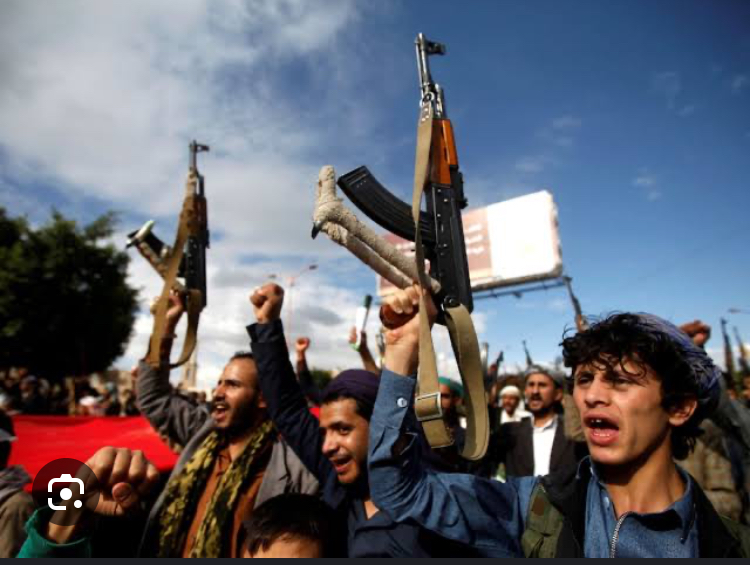
    The civil war in Yemen had its genesis in the Arab Spring and the uprising that toppled the government of Ali Abdullah Saleh. As Saleh struggled to maintain his grip on the presidency, he recalled the military from outlying areas to Sanaa, the Yemeni capital. Houthi rebels in the country’s north and al-Qaeda in the Arabian Peninsula (AQAP) militants in the south were quick to exploit the power vacuum. Fighting between government forces and opposition tribal militias intensified, and on June 3, 2011, Saleh was the target of an assassination attempt that left him seriously injured. Saleh left Yemen to receive medical treatment, a move that ultimately led to the transfer of power to Saleh’s vice president, Abd Rabbuh Manṣur Hadi. Hadi failed to reassert an effective government presence in regions under Houthi and AQAP control, and his violent response to protests in Sanaa sparked sympathy for the antigovernment cause. In September 2014 Houthi rebels entered Sanaa, and by January 2015 they had occupied the presidential palace. Hadi was placed under house arrest, but he escaped and fled to the southwestern port city of Aden. A force composed of Houthis and troops loyal to the deposed Saleh then laid siege to Aden, and Hadi fled the country in March 2015. That month the conflict was internationalized when a coalition led by Saudi Arabia moved to drive the Houthis from power and restore the Hadi government. It was widely believed that Iran was providing material support to the Houthis, and numerous arms shipments from Iran were seized en route to the conflict zone. By the end of 2021 the United Nations estimated that more than 375,000 lives had been lost as a result of the war; indirect causes, such as hunger and easily treatable diseases, were responsible for more than half of that total. In addition, more than three million Yemenis had been displaced by the war.


  • Russia-Ukraine War


    In February 2014 Ukraine’s pro-Russian president, Viktor Yanukovych, was swept from power after months of popular demonstrations and a failed violent crackdown on protesters. Yanukovych fled to Russia and, within days of his departure, disguised Russian troops invaded the Ukrainian autonomous republic of Crimea. Russian President Vladimir Putin announced the illegal annexation of Crimea in March, and weeks later disguised Russian troops invaded the Ukrainian regions of Donetsk and Luhansk. By early summer in 2014, pro-Russian forces had overrun a sizable swathe of territory, and in July Malaysia Airlines flight MH17 was shot down over rebel-controlled territory by a Russian-supplied surface-to-air missile. Nearly 300 passengers and crew were killed. A cease-fire was signed in February 2015 that slowed but did not stop the bloodshed, and the Donbasremained in a state of frozen conflict for the next seven years. By 2021 more than 14,000 people had been killed in fighting in eastern Ukraine.

    On February 24, 2022, Russia launched a full-scale invasion of Ukraine. Although Russian forces made significant gains in the first days of combat, Ukrainian defenders rebuffed attempts to seize Kyivand other major cities and were soon launching counterattacks at Russian positions. The Russian invasion was characterized by indiscriminate artillery bombardments and air strikes on Ukraine’s cities, and an estimated 40,000 Ukrainian civilians were killed in the first year of fighting. Perhaps 100,000 Ukrainian troops were killed in combat and more than a third of Ukraine’s population was displaced by combat. Russia also conducted an ethnic cleansing campaign in the territory that it occupied, and as many as 1.6 million Ukrainian citizens were forcibly transferred to Russian territory. Putin had hoped to complete his conquest of Ukraine in a matter of days, but, after a year of sanguinary combat, an estimated 200,000 Russian troops had been killed, and Russia’s conventional military capability had been significantly degraded.

TOURIST COUNTRIES WITH EXCLUSIVE FUN IN THE WORLD

Creating an exhaustive list of tourist destinations in the world is challenging, as there are countless places to visit. However, I can provide you with a list of some well-known and popular tourist destinations from various regions around the world:


Paris, France - Eiffel Tower, Louvre Museum, Notre-Cathedral

Rome, Italy - Colosseum, Vatican City, Trevi Fountain


New York City, USA - Statue of Liberty, Times Square, Central Park


Tokyo, Japan - Tokyo Tower, Shibuya Crossing, Imperial Palace


Sydney, Australia - Sydney Opera House, Sydney Harbour Bridge, Bondi Beach


Machu Picchu, Peru - Inca Ruins in the Andes Mountains


Cairo in Egypt - Pyramids of Giza, Sphinx, Egyptian Museum


Rio de Janeiro in Brazil - Christ the Redeemer, Copacabana Beach, Sugarloaf Mountain


Istanbul in Turkey - Hagia Sophia, Blue Mosque, Grand Bazaar


London in United Kingdom - Buckingham Palace, Tower of London, British Museum


Venice in Italy - St. Mark's Basilica, Grand Canal, Rialto Bridge


Cape Town in South Africa - Table Mountain, Robben Island


ADVERTISEMENT! ADVERTISEMENT!! ADVERTISEMENT!!!

Are you willing to spend your vacation in any of this countries?


COAST TO COAST EVIDENCE MULTI-PURPOSE LMT @ FLY EVIDENCE can make you enjoy and experience a life full of fun and excitement


Wednesday, 11 October 2023

TEN STRONGEST ANIMAL IN THE WORLD

Certainly! Here are 10 of the strangest animals in the world, each known for their unique and unusual characteristics:

Axolotl (Ambystoma mexicanum): Also known as the Mexican walking fish, it's a type of salamander that never undergoes metamorphosis, remaining in its aquatic larval form throughout its life.


Platypus (Ornithorhynchus anatinus): This egg-laying mammal from Australia is known for its duckbill, webbed feet, and the ability to produce venom, making it a true oddity.


Narwhal (Monodon monoceros): Often referred to as the "unicorns of the sea," narwhals are Arctic whales with long spiral tusks that can grow up to 10 feet long.


Aye-Aye (Daubentonia madagascariensis): Native to Madagascar, the aye-aye is a nocturnal lemur with a long, bony, and witch-like middle finger used for finding insects in tree bark.


Blobfish (Psychrolutes marcidus): This deep-sea fish has a gelatinous appearance and tends to look quite ordinary when not at the extreme depths where it lives.


Star-Nosed Mole (Condylura cristata): Known for its peculiar star-shaped nose, this mole uses its highly sensitive snout to detect prey underwater.


Mantis Shrimp (Stomatopoda): These marine crustaceans are famous for their incredible ability to see polarized light and their powerful claw strikes, which can break glass aquarium walls.


Hagfish (Myxini): These ancient, jawless fish are known for their slimy mucus production, which they use as a defense mechanism against predators.


Sloane's Viperfish (Chauliodus sloani): Living at great depths in the ocean, this fish has long, needle-like teeth, and it's known for its bioluminescence.


Pink Fairy Armadillo (Chlamyphorus truncatus): This tiny armadillo species from Argentina is known for its unique, shield-like pink shell and is rarely seen due to its nocturnal habits.

These animals showcase the incredible diversity of life on Earth and some of the truly bizarre adaptations that have evolved in the animal kingdom.

Featured post

AFRICA: THE TRIBE CALLED “YORUBA” IN NIGERIA

  RANDOM FACTS ABOUT YORÚBÀ THAT PUTS NIGERIA ON THE MAP💫    1.The richest estate in Nigeria is found in yorubaland 🤞. RANDOM FACTS ABOUT ...